Let me know myself and know you

Contemplation is about seeking to be still in the presence of God. It is about allowing yourself to recognise the presence of the Living Jesus within and beyond yourself. 

It’s about being still. It’s about opening yourself before God. It’s about finding the space to fix your eyes, your ears and your mind on Him.

And let us run with endurance the race God has set before us. We do this by keeping our eyes on Jesus, the champion who initiates and perfects our faith. 

Hebrews 12:1-2 (NLT)

Be still before the Lord and wait patiently for him.

Psalm 37:1 (NLT)

You will keep in perfect peace all who trust in you, all whose thoughts are fixed on you!

Isaiah 26:3 (NLT)

“Lord Jesus, let me know myself and know You,
And desire nothing save only You.”

St Augustine of Hippo


Richard Jackson is the former Executive Director of Christian charity Family Foundations Trust, and an international coach for CCI Worldwide

The solitary place: Mark 1:35 – 37

We’re in Capernaum. It is really early on in the ministry of Jesus. We’re reading the account which was written by the Apostle Mark, which almost certainly recounts the memories of a man called Peter. Simon Peter. In this passage he’s simply called Simon.

I love the idea of Jesus waking up early, before everyone else in the house was awake, and creeping out. It’s such a moment of sheer humanity. Walking out of the town Jesus went to a quiet place.  He went there to pray. He went there to find space. Space with God.

Mark’s account tells us that when they discovered Jesus had gone, not everyone was happy. Simon was not happy. They went to look for him. They found him. “Everyone is looking for you” says Simon. Let’s be honest, it has the hint of exasperation about it. “Jesus,” it sounds like, “What are you doing? Everyone’s looking for you!”

Jesus went somewhere quiet to spend time with God. To be apart with God. He has been still. You’ll recognise the sense of the contemplative. And now he’s ready to go. Go to the villages to preach the Kingdom of God. You’ll recognise the sense of the evangelical.

I’m trying to follow Jesus. I am a contemplative evangelical. Some people think that is a challenging combination. So did Simon Peter. 

Very early in the morning, while it was still dark, Jesus got up, left the house and went off to a solitary place where he prayed. Simon and his companions went to look for him, and when they found him they exclaimed, “Everyone is looking for you!” Jesus replied, “Let us go somewhere else – to the nearby villages – so that I can preach there also,

Mark 1: 35-38

Richard Jackson is the former Executive Director of Christian charity Family Foundations Trust, and an international coach for CCI Worldwide

Isaac. Meditation. Genesis 24:63

It’s easy to make the case that prayer, as an active representation of relationship with God, is a central theme of Scripture. Prayer permeates the Old Testament stories, underpins the Psalms, is foundational to the prophets, and is front and centre of the development of the early Church. And of course, Jesus often looked for quiet places to pray (Luke 5:16).

I’m often told that contemplative prayer doesn’t appear in Scripture. I’m not convinced. I tend to disagree. Here’s one of the first instances which attracts my attention.

In Genesis 24, we read the story of Isaac meeting his wife, Rebekkah, for the first time. There is a moment when Isaac, sitting quietly out in the fields, looks up and sees the approaching camels bringing the servant of his father, Abraham, and Isaac’s new wife, Rebekkah. 

In verse 63, there is a Hebrew word לָשׂ֥וּחַ. Don’t worry about how to pronounce the word! Your Bible will probably have a footnote next to this word, telling you that the word is difficult to translate from the Hebrew. That means that we can never be completely sure exactly what meaning was intended by the writer of Genesis. The nearest translation we can get is ‘meditate’, and this is reflected in English and most modern language translations.

So, here’s the picture. Just before Rebekkah arrived at her new home, Isaac went out to the field to meditate. Isaac went out in the evening, away from his tents, away from his people, away from his animals, away from his responsibilities, to be on his own in the pasture. There is the sense of being alone. There is the sense of thoughtfulness. There is the sense of contemplation.  

62 Now Isaac had come from Beer Lahai Roi, for he was living in the Negev. 63 He went out to the field one evening to meditate,f] and as he looked up, he saw camels approaching. 

Richard Jackson is the former Executive Director of Christian charity Family Foundations Trust, and an international coach for CCI Worldwide

Susannah Wesley’s Prayer – Help me, Lord

Susannah Wesley is sometimes called the ‘Mother of Methodism’. She lived a challenging life and knew what it was to struggle and to suffer. Yet through it all, she longed to experience the presence of God. She was evangelical, teaching her children the meaning and life application of Scripture. Yet she was also contemplative, practising prayer and meditation in the midst of the an overwhelmingly busy and difficult life.

‘Her marriage to a penniless preacher was deeply dysfunctional, she lost nine children in infancy and raised ten more almost single-handedly. Their home was burned down. Twice. Her husband was imprisoned. Twice. And yet her simple, honest persevering prayers undoubtedly changed the world.’ (How to Pray, Pete Greig, p39)

A prayer of Susannah Wesley

Help me, Lord, to remember that religion is not to be confined to the church, or closet, nor exercised only in prayer and meditation, but that everywhere I am in your presence. So may my every word and action have a moral content. May all the happenings of my life prove useful and beneficial to me. May all things instruct me and afford me an opportunity of exercising some virtue and daily learning and growing towards Your likeness. Amen.

Richard Jackson is the Director of LifePictureUK and former Executive Director of Christian charity Family Foundations Trust


Freedom of going with the flow: 2 Corinthians 3:17

Georges Simenon is not a widely quoted writer, either by contemplatives or evangelicals. He was a prolific author of the 20th Century, producing nearly 500 novels during his lifetime. He is unquestionably best known for his series of Maigret novels, although many of his other books are of far greater literary quality. Simenon was not a Christian, but he was a true observer of life and a great storyteller.

I love reading, and at least half an hour of most days is spent reading a novel. This week I have been reading ‘Maigret in New York’, and I came across something which resonated with me. For those who are unfamiliar with his work, Maigret is a French detective. In this particular book he is pursuing a case in New York (the clue was in the title) and defending his methods to an FBI agent. Whilst the aim of both is to catch and convict criminals, the FBI agent is a man who bases his investigation on assumptions, whilst Maigret claims to rely exclusively on the evidence. His principle is to avoid making assumptions about any case, until the evidence proves the guilt or innocence of the suspect.

‘I’m at sea, Lieutenant,’ said Maigret, ‘We probably both are. Except that you, you fight the waves, you mean to go in a definite direction, whereas I let myself drift with the current, clutching here and there on a passing branch.’ (Maigret in New York, 1947, p112)

What has this to do with our conversations about the contemplative evangelical?

It is so very easy to be dogmatic about what we believe. We decide something about our faith, probably because someone has told us something or we read it in a book, and we strive to hold on to it. Our understanding of sin, forgiveness, salvation, atonement, trinity, or whatever. Our view becomes fact for us, and we will not allow anything or anyone to deflect us from our view. We so easily become entrenched in a concept, without ever really questioning or challenging it. We don’t stop to weigh it, to test it, to see whether it is actually the truth. Our energy and enthusiasm can easily become sapped as we ‘fight the waves’ because of our determination to hold on to some small detail of our belief.

Rather than tiring ourselves out fighting the tide and waves to hold on desperately to something which seems important to us, what if we were to surrender to the current. What if we were to allow ourselves to drift in the flow of the Holy Spirit? What if we were to allow our spirit the freedom which is offered by the presence of the Holy Spirit?

As a contemplative, I read Scripture. I practice Lectio Divina. I pray. I lay down in silence. I yearn for something deeper in the stillness. I seek His presence as I try to allow my Spirit to flow with the Holy Spirit.

As an evangelical, I read Scripture, I try to apply the teaching of Jesus to my life. I pray. I worship. I seek the Holy Spirit. I want to be joyful, to dance before God as I go into the world where he has placed me to share His love and tell others about Him, confident that His Holy Spirit goes with me and before me.

For the Lord is the Spirit, and wherever the Spirit of the Lord is, there is freedom.

 2 Corinthians 3:17 (NLT)

For me, faith is about moving in the flow of the Holy Spirit. Just now and then, it’s good to grab on to a branch and take stock, to see where the Spirit has taken me, and to be thankful.

I am a contemplative evangelical.

Richard Jackson is the Director of LifePicture UK and former Executive Director of Christian charity Family Foundations Trust Ltd 
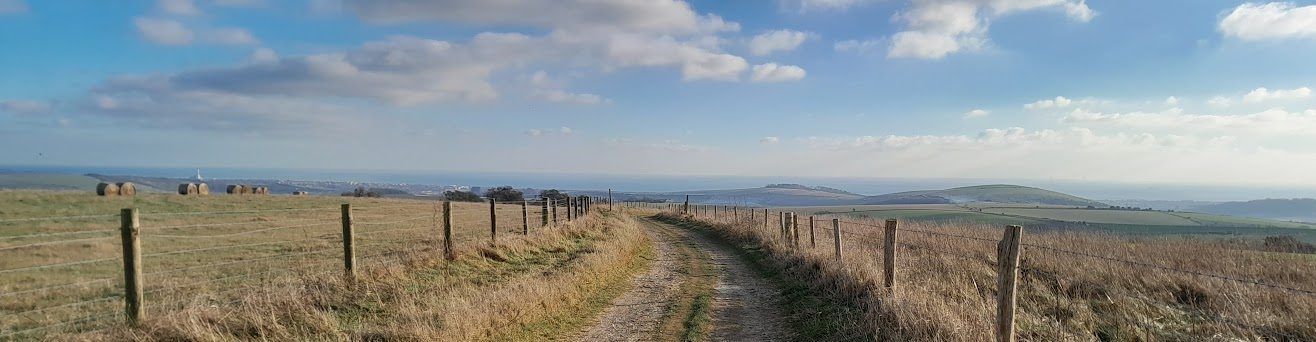
Be still, then move on.

For me, silent prayer is only ever the first step. It is an essential act of preparation. The second step is taking our experience in that silence of the Living Presence of God into our active life. If our actions and words do not come from the right place, they are worse than useless.

“The more we receive in silent prayer, the more we can give in our active life. We need silence to be able to touch souls. The essential thing is not what we say, but what God says to us and through us. All our words will be useless unless they come from within. Words which do not give the Light of Christ increase the darkness.”

Mother Theresa of Calcutta

Following the right path…

There is a point in Bunyon’s Pilgrim’s Progress where the intrepid Christian finds himself at a crossroads. To the left and to the right there are relatively comfortable looking paths. Straight ahead is a challenging climb up a hill. There is a decision to be made. His companions decide that the paths to left and right will probably lead round the hill, rejoining the main path further on. One takes the path to the left, which leads into a great wood and on into Danger. The second takes the path to the right, which passes through a wide field, and leads to Destruction. His companions are never seen again. Christian makes his decision and follows straight ahead. The straight path, the right path, is the hardest. (Pilgrims Progress, Chapter 3 (p.39))

Jeremiah 6:16 says ‘Stand at the crossroads and look. Ask where the ancient path is, and walk in it, and you will find rest for your souls.’

We constantly face decisions which impact on our lives. Sometimes we make the right decision. Often we look back and wonder whether, if we had decided differently, we might have found rest for our souls!

The ancient paths in which we are to walk are those which were established long ago and lead us on towards the Kingdom of God. Whilst they are not always the easy option, they should be well worn and clear, but the clutter and pressures of our lives make them difficult to see, and the complexity of our world means that there are many alternative paths available.  We need help if we are truly to discover the paths God has laid out for us.

We need to be people of prayer. Prayer at the beginning of the day. Prayer at the end of the day. Prayer at various other points during the day. Not just rushed, mumbled liturgy. Rather thoughtful, open, warts and all, heart and soul prayer. Prayer which speaks, but prayer which listens. Contemplative prayer. For that, we need to stop. We need to be still.

And of course we are not called just to sit still. We need walk out into the world where He has placed us, with our eyes open. Ready to serve in any way we can. Ready to show the love of Christ to all those with whom we come into contact. Ready to learn. Ready to listen. Ready to share the love of Jesus. Evangelical readiness. For that we need to get going.

Someone once asked Mother Theresa to pray that God would show them how they should be spending their life. If God showed you all that, she replied, you would not depend on Him. I will pray that he shows you where you should direct your steps today.

Next time you are at a crossroads, or an alternative ‘easy’ path attracts your eye, be still. Take time to reflect and listen. Be contemplative. As your confidence in Christ is restored, get ready. Be evangelical. GO!

Richard Jackson is the Executive Director of LifePicture UK and former Executive Director of Family Foundations Trust

The Contemplative Evangelical

During a recent job application process, I described myself as a contemplative evangelical. My use of the term was intentional, rather than spontaneous. I felt that it described where I am in my walk with Christ. Labels are always dangerous and can lead to misunderstanding, so naturally, I was invited to explain what I meant.

I got the job, but as I’ve continued to use the label, I’ve found that it attracts some interesting responses.

It seems that for a lot of people, the idea of being both an evangelical and at the same time contemplative is problematic. Some people regard the two labels are mutually exclusive. I’m convinced that they complement each other perfectly.

As an evangelical, I define myself as a Christian who is committed to following Jesus.  I believe that the Bible is the Word of God, that Christ is the Son of God, His love is infinite and transformational, and that he is my personal saviour. Following is an active verb. Christ told us to ‘Go.. ‘ I believe that I should accept the responsibility to actively live out my faith in every area of my life. Evangelicals, in the contemporary sense, like to see themselves as active.  They like to see themselves as being out there, doing stuff for Jesus.

As a contemplative, I believe that following Jesus involves drawing closer to God. It involves experiencing His presence.  I believe that through exploring the contemplative path, I learn more about what it means to live in Christ, and what it means for Him to live in me. I believe that as a Christian I need to accept the challenge to experience Him in every area of my life.  It involves silence, meditation and contemplation. The contemplative state implies taking time to be inactive.

So, as a starter for ten, therein lies part of the problem for some people. The contrast between the ‘inactive’ stillness of the contemplative and the constantly ‘active’ mindset of the evangelical is too much for some.

There’s much more to this, but there’s genuinely a tension here. I am looking forward to exploring it more in the weeks to come.

Richard Jackson is the Executive Director of LifePicture UK and former Executive Director of Family Foundations Trust

Reclaim the Rainbow

A few weeks ago, someone shared a post which referenced an Evangelical preacher in the US calling for Christian people to ‘Reclaim the Rainbow’ for God. The target of his ire was not the local kindergarten, or any of the other millions of businesses (including may run by Christians, who use the rainbow motif as part of their brand. Predictably, the target of the post was the LGBT+ community for their use of the Pride flag.

The post raised a few questions for me.

The original flag was designed by Gilbert Baker in 1978, and has, in slightly altered forms, been available ever since. My first question is why this rather pointless discussion continues to rumble on 40 years later.

Secondly, I wonder whether it had escaped attention that the Pride flag as originally conceived contained eight colours, each symbolic of a particular meaning. The current version includes six colours. It is generally accepted, on the other hand, that the rainbow which we love to see after a shower or storm has seven colours. The Pride flag might remind you of a rainbow – you may even choose to call it a rainbow – but it’s not actually pretending to be the same as the real rainbow.

Scripture does say that the actual rainbow, the one we see in the clouds after a shower,  was set in the sky by God himself, to symbolise his covenant of love and faithfulness with all mankind. It occurs to me that a God whose love is sufficiently wide and deep to embrace every last member of the LGBT+ community, along with the countless number of us evangelicals who are prone to missing the point, would be largely unconcerned by the artistic symbolic representation of a rainbow in a flag.

Here’s the thing. A rainbow appears when sunlight passes through droplets of water, normally rain or mist. It is a natural, meteorological phenomenon which involves reflection, refraction and dispersion of light, creating an arc shape spectrum of multiple colours. 

The fact is that unlike the LGBT flag, the rainbow which adorns the skies doesn’t belong to the LGBT+ community, nor, as far as I know, have they ever claimed to own it. As far as I can see, nowhere in Scripture does it say that the rainbow belongs to the Christian community either!  

The Bible says that it was God who set his rainbow in the clouds (Genesis 9:13). His Gospel is a message of love. Rather than itching to tear up other peoples flags, lets use our energy to embrace them with His love.

Other Rainbow Posts: 31st December 2021 ‘Happy New Year’

Richard Jackson is the Executive Director of LifePicture UK and former Executive Director of Family Foundations Trust