Herein You Shall Find..

I’ve always loved poetry. I love reading it and there have been times in my life when I loved writing it. As a young man, I regularly submitted poems to publishers and regularly went through the disappointment of the long forgotten ritual of receiving rejection slips. One such note described my work as an ‘an eclectic mix of style, form and subject’. I am not at all sure that it was intended as a compliment. As feedback goes, it was undoubtedly accurate and in view of the quality of the pieces, extraordinarily generous. 

On one occasion, I made a small handwritten booklet of my own poems, purely for my own use, which was called ‘Herein You Shall Find, the Meditations of a Fool’. At the time, I’m sure that I thought this was a rather avant garde sort of title, and doubtless entertained the fantasy that this would somehow lead to literary fame and fortune. It didn’t (or it certainly hasn’t yet) but the notes therein were certainly an eclectic mix of style, form and subject. 

As someone once said, ‘The past is a different country. They do things differently there.’ 1 In these times in which life is both simpler yet far, far more complex, the incredible opportunities offered by the internet and social media mean that one can step with relative ease around the editorial demands and constraints of the publishing house. You and I can scatter our rambling thoughts upon an unsuspecting public with relative ease. This blog is, in a sense, my own exercise of that privilege.

As I write this, there is a sense in which I wonder if that feedback from a ‘different country’ so many years ago has in some way come to define my entire life. I certainly make no apology for the fact that it adequately describes the content of The Cross Blog. I have been blogging at The Cross Blog and elsewhere for many years and much of the content, like my poetry, has certainly been rambling and readily forgettable. Whilst I am marginally more organised than I used to be, I still tend to blog as I think or feel led. Whilst there are exceptions, few of my posts are explicitly linked. I rarely follow an ongoing theme, except that almost everything I write is intended to be in some form an expression of my faith as a follower of Jesus. My purpose is always to encourage. Never to offend. 

Please leave a comment, or if you would like to get in touch, contact me here

Thank you for visiting the Cross Blog.

Richard Jackson is the former Executive Director of Family Foundations Trust, a Christian charity in South East England. He is exploring what it might mean to live as a contemplative evangelical.

1 L.P.Hartley, ‘The Go Between’

Virtually Perfect

We use the word ‘virtual’ quite a lot nowdays. It’s taken on different meaning in modern life. We are attracted by the sense of a virtual world. It speaks of a kind of place which is almost real, but significantly different. We kind of like that.

A friend of mine told me today that he is ‘virtually’ tee total. It occurred to me later that being tee total is really an absolute – you either are, or you’re not. You can’t be ‘virtually’ tee total any more than you can be ‘virtually’ vegetarian.

If you eat meat or fish – any meat or fish – you’re not a vegetarian. If you drink alcohol – any alcohol – you’re not tee total. For me – being neither vegetarian or tee total – there’s nothing particularly wrong with being a meat eater or having the occasional drink, but this is about the fact that we really ought to be honest with ourselves about who we actually are.

It’s the same with perfection. You can’t be ‘virtually perfect’. If you have ever done anything wrong (and we all have) you are imperfect. Jesus lived around lots of people who thought themselves to be ‘virtually’ perfect. They thought that by strictly following religious rules, they could achieve perfection. He didn’t waste much time on them. Why? Because He knew who they really were. They were deceiving themselves, and each other, but they weren’t deceiving Him.

The Bible says that Jesus actually spent most of His time reaching out to ordinary people. Working people. The lonely. The sick. The outcast. People who knew that they were imperfect. People who weren’t at all sure that they were good enough. Real people. Like you. He knew who they really were. He saw into their hearts. He searched them, and He knew them. Jesus loved them in their imperfection. These are the people who Jesus wanted to do life with Him.

You might convince yourself that you’re something that you’re not. You might even convince other people. But you won’t convince Jesus. You can’t be a virtual Christian.  You’ll never be perfect, but you have to use all your heart, and all your soul, and all your strength, and all your mind, to follow Jesus. Jesus will never be convinced by your social media profile or the virtual image of yourself which you may successfully project to your friends. Why? Because He knows who you really are. He’s not interested in who or what you ‘virtually’ are. He knows you, the real you. And you – the real you – are the person He wants to be doing life with.

Lord, You have searched me. And You know me. (Psalm 139:1)

If anyone thinks they are something when they are not, they deceive themselves. (Galatians 6:3)

Richard Jackson is the former Executive Director of Christian Charity Family Foundations Trust. He is exploring what it means to live as a Contemplative Evangelical.

No-one can serve two masters

‘No-one can serve two masters. Either you will hate the one and love the other, or you will be devoted to one and despise the other. You cannot serve God and money!’ Luke 16:13

I read this verse today, and it reminded me of something which happened three years ago.

I was in an unusual position at the time. For nearly ten years we had been working long hours on a very low salary, following our calling to serve in a missional role for a Christian charity. For various reasons we had just resigned from our jobs. The biggest reason was that we felt God had told us to go. For the first time in my life I was facing unemployment.

We decided to take a few weeks of sabbatical, after which I would look for work. The purpose of the sabbatical was two fold. Firstly, I was exhausted. I needed a break. But of course the biggest reason for taking a sabbatical was to wait on God to discern what we should be doing next.

Then, something unexpected happened. Out of the blue, a good friend of mine, who I hadn’t really spoken to for ten years, contacted me and offered me some work as a project manager in central London. The offer was very well paid. I would earn as much in a day as I had been earning in a month for most of the last ten years. It was an attractive offer and I very seriously considered taking it. It would solve all of our financial challenges and set us up comfortably for retirement. It was a very tempting offer. There was a condition – I needed to start immediately.

In one sense – from a financial perspective – it was a no-brainer. Take the job. Take the money.

But of course there was another perspective. The purpose of my sabbatical was to seek God’s will for my life. It was finding out how I should be serving Him. Was it right to set aside that opportunity to rest before God, by diving straight in and taking a well paid job.

I was at a serious crossroads. I had to make a decision on which path to take. Follow the money, or trust God for the next step.

I didn’t take the job. I started my sabbatical.

Within a few days, I found myself drawn to and focussing on this verse.

‘Keep your lives free from the love of money. Be content with what you have got.’ (Hebrews 13:5)

Here’s the thing. If you’re going to ask God about your future, you need to listen to what He’s saying to you and take account of it. This verse seemed to affirm my decision to reject the job offer.

So here we are, three years on from that crossroads. We’re doing ok. We’re back doing relatively low paid charity jobs, earning as much in a month as I could have earned in a couple of days if I’d followed the money. But we do have a real sense of leading to the roles which we are now doing. Looking back, it seems to me that the one who promised never to leave us or forsake us has been looking after us.

Reading this verse this morning reminded me that three years ago I had been standing at that crossroads. It reminded me of the decision we made, and made me realise how far we have come. And that recollection made me realise the truth of this verse.

‘No-one can serve two masters. Either you will hate the one and love the other, or you will be devoted to one and despise the other. You cannot serve God and money!’ Luke 16:31

Richard Jackson is the former Executive Director of Christian charity, Family Foundations Trust. He is exploring what it means to live as a contemplative evangelical.

Keep It Simple (Luke 9: 1-6)

Keep it Simple: Luke 9: 1-6

I remember teaching my oldest daughter to cross the road outside our house on her own. Crossing the road safely is a critical life skill. I guess that I walked her through it lots of times, but there came that day when I needed to let her do it for herself. Of course I chose the time and the place. The first time she set out alone, I made sure that the road was quiet, and there was very little risk, but I was still anxious for her. It’s not always easy to see people you love stepping out on their own. When the time came, I wasn’t far away – ‘keeping an eye’. Ready to leap in and help if necessary.

By the time we reach Luke 9, we know that Jesus has spent time teaching His disciples by His words and example. The focus is on the twelve Disciples. There were still many more people, men and women, following Jesus, but these twelve had been brought forward to be trained for their place of leadership. It’s time to let them step out on their own. Jesus called them together. He gave them power and authority to do what he wanted them to do. The power and authority to ‘drive out demons, cure diseases, proclaim the kingdom of God, and to heal those who were ill.’ (v1-2).

So He was clear about what they were to do, and He gave them the power and authority to do it.

Then we come to what looks like a rather strange instruction. ‘Take nothing for the journey – no staff, no bag, no bread, no money, no extra shirt.’ (v3). I don’t know whether it sounds strange to you, but to me, as someone who grew up as a Scout, with the motto ‘be prepared’ at the front of my mind, it’s very challenging. Whether I’m travelling for work or holiday, long before I am at the airport I am worrying about the weight of my bag. It’s not just the clothes and the toothbrush. It’s not even the Bible and the notebooks. It’s everything else that I might need and has been crammed into the bulging suitcase. There’s that heavyweight laptop and peripherals. I might want to read that extra book. I might need my sketchbook and paints. I might need – well all sorts of things.

Yet sending these first disciples out on that very first mission adventure, Jesus is saying ‘Go, and take nothing with you.’ Really? You see in training his disciples, Jesus has already dealt with this. What shall we eat? What shall we drink? What shall we wear? ‘Don’t worry about your life,’ Jesus had taught them, ‘what you will eat or drink, or about your body, what you will wear. Is not life more than food and the body more than clothes.’ Matthew 6:25. These are not things they were to worry about, for ‘your heavenly father knows that you need them.’ (Matthew 6:31). The teaching of Scripture is that when we are following Him, whilst we may not get everything we want, God provides everything we need, when we need it (Genesis 22:14). When we encumber ourselves with unnecessary baggage, rather than helping the cause, it distracts us. It gets in the way of His purposes.

The message was not that they should never travel with a walking stick or a bag ever again. The lesson was step out in faith. Follow my directions. Be obedient to me. Trust me. If you do, I will provide everything you need.

So what do we learn from this. What has it to do with our lives and our work for Jesus.

There comes a time in our walk with Jesus when you will realise that He is saying that sitting here, listening and learning, is good, but it’s not enough. There is work to be done. Work which will build and develop your faith. We need to step out and do what He is asking us to do. Our instinct is to hold back. ‘I can’t afford that.. I haven’t got the right equipment for that.. ‘ and so on. The reasons not to follow Jesus are endless.

In this passage, Jesus says, ‘Just go..’ Leave the rest to me. That’s the lesson.

When my daughter crossed the road on her own for the first time, I was so close by, that I was ready to run out and stop the traffic if I needed to. I really wanted her to succeed. But I needed her to have the confidence – the faith in herself – to step into the road and keep going. God’s plans for you are that when you follow Him, you will be successful (Jeremiah 29:11). The last thing He said to His disciples before He returned to heaven was ‘Remember this – I am with you always.’ (Matthew 28:20). That’s His promise – He is close by. He is your strength. He is your shield. He is your provider. He wants you to succeed. You need to step out in faith and trust Him more.

This Scripture says if you are following Jesus, doing the things He wants you to do, be prepared to trust Him for everything you need. You will be His chosen instrument for the task He has planned for you (Acts 9:15) and He will not let you down. He will give you the power and authority to achieve His purpose. His anointing is the only equipment you need. When you walk in His ways, be prepared to achieve more than you ever imagined possible. Don’t be constrained by your expectations because all things are possible for God. You will find yourself in situations you never dreamed you would see.

Yes Lord, but there’s all this stuff that I think I might need along the way…

“ Trust in the Lord with all your heart and lean not on your own understanding .” (Proverbs 3:5)

Jesus said, ‘Don’t load yourself up with equipment. Keep it simple. You are the equipment.’ (Luke 9:3-4, The Message)

Richard Jackson is the former Executive Director of Family Foundations Trust and is an international coach with CCI Worldwide. He is working out what it might mean to be a contemplative evangelical.
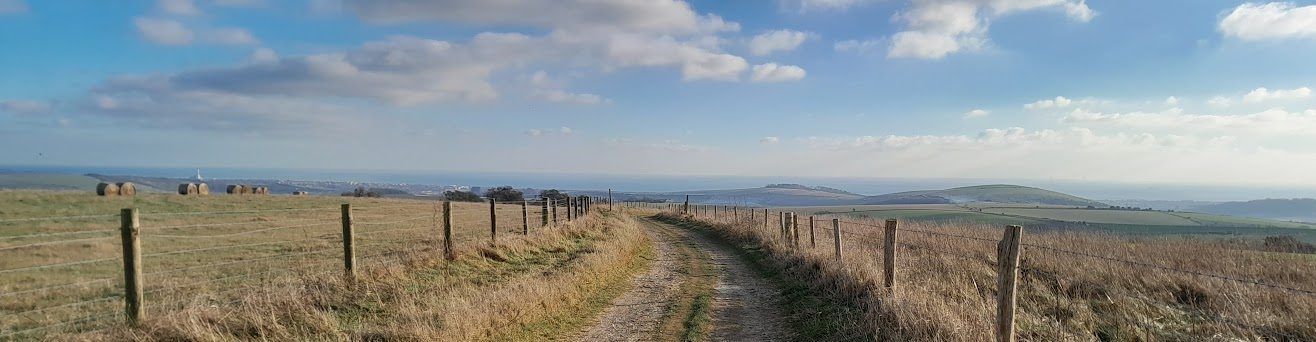
Look for your Mountainside (Luke 6:12)

Take a moment on the mountainside… (Luke 6:12)

There are a number of points in the Gospels where we read about Jesus seeking out a place of solitude, usually to pray. To me, this one is particularly special. It’s a critical moment in the story. We’re reminded that there were always more than twelve disciples. Luke 6:17 speaks of a ‘large crowd of disciples.’ A large group of men and women who were part of His life. They were convinced that he was someone special. They had made the decision to follow him. This is the point in the story when Jesus is ready to make a decision. Perhaps the biggest decision of his leadership. Faced with this crucial moment – this crucial decision – Jesus looks for that place of solitude.

‘One of these nights, Jesus went out to a mountainside to pray. When morning came, he called His disciples to Him and chose twelve of them.’ Luke 6:12Jesus didn’t just select twelve disciples. He selected the right twelve disciples. The ones who had the right potential. The ones who were right for the job. Before He made His decision, he found some space – a place where he could be alone – to be with God. To touch base with God. To talk to God. To listen to God. After praying, Jesus showed incredible wisdom in His selection. Divine wisdom. The wisdom which is a gift from God.

As a Christian, there can be no greater role model than Jesus.

When you are facing a challenge, a decision, or a critical point in your life, take a moment. Before moving forward, look for the place where you can be alone with God. Look for your place where you can be alone. Look for your mountainside. Take time to be with God. To touch base with God. To speak to God. To listen to God. Ask for His wisdom. Divine wisdom. The wisdom which is a gift from God.

Richard Jackson is the former Executive Director of Family Foundations Trust and is an international coach with CCI Worldwide. He is working out what it might mean to be a contemplative evangelical.

Palm Sunday

Palm Sunday Reflection

‘As we draw closer to Easter, the Christian Church celebrates some significant steps in the life of Jesus, including His entry into Jerusalem on Palm Sunday. A great crowd welcomed Jesus to the city as their king, but importantly, not everyone understood the kind of king he would be. Many hoped that he had come to forcefully rid Israel of the occupying Roman army, but it soon became clear that Jesus was a very different type of king.

In recent weeks, we have recognised afresh that we live in an unpredictable and sometimes very violent world. We cry out for immediate change for the better. We might call out to God for  powerful saviour – someone who will forcefully and immediately make everything right. Like some in that Jerusalem crowd, we easily miss who Jesus really is. Rather than forcing political change, the real Jesus invites each of us to be personally transformed by His love, offering us His Gospel of peace, hope and justice. This is the real Jesus – this is our King.’

(First Published in the West Sussex County Times, 7th April 2022)

Richard Jackson is the former Executive Director of Family Foundations Trust and is an international coach with CCI Worldwide. He is working out what it might mean to be a contemplative evangelical.  


Listening to the marginalised perspective

in every generation, and in all cultures, there have always been those who get pushed to the edge – to the margins of society. Their views are disregarded. Their experiences are ignored. Their voices are not heard.  They are excluded from the conversation. They are marginalised. This tendency to exclude people – to regard them as ‘other’ – is deeply ingrained in culture. Not only does marginalisation cause unimaginable pain, it creates an abyss of misunderstanding, rejection and despair. In this emotionally charged atmosphere, we tend to put all of our energy into building and defending our position. Because we are not looking or listening, we will miss an opportunity to develop our understanding of Christ and His relationship with mankind, simply because we refuse to engage with those whose views and experiences are different from our own. We need to intentionally listen to the marginalised voice.  

‘Theology done from the perspective of marginalised groups creates a richer, more comprehensible, more compassionate Christianity. To ignore the contributions from people with bodies different from our own is equivalent to saying some bodies are not as holy as others – that some members don’t belong in the body of Christ, despite scriptural witness to the contrary.’

Austen Hartke. Author, ‘Transforming: The Bible and the Lives of Transgender Christians

Richard Jackson is the former Executive Director of Family Foundations Trust and is an international coach with CCI Worldwide. He is working out what it might mean to be a contemplative evangelical.  

Pray continually

Rejoice always, pray continually, give thanks in all circumstances, for this God’s will for you in Christ Jesus.

(1 Thessalonians 5: 16-18)

We are living in challenging days. In such times, there are days when we know that we need to pray. Those are days when we find it hard to pray – days when we cannot find the words to pray – days when we find it hard to rejoice or give thanks – days when we learn what it means to feel a burden to pray continually. Today is such a day.

Today we are all praying. It is a day when it is difficult to pray. Difficult to find the words. 

The days when we don’t know how to pray are the days when we need to be praying together. Today is such a day.

Richard Jackson is the former Executive Director of Family Foundations Trust and is an international coach with CCI Worldwide. He is working out what it might mean to be a contemplative evangelical.  


The Destructive Force of Dualism

Dualistic thinking is addictive. We are culturally immersed in it. In spite of ourselves, we slip into it so easily, often without noticing what we have done. It insidiously colours our attitudes. It shapes our behaviour. It’s the philosophy of ‘them and us’. It influences our view of ‘the other’. It encourages us to make assumptions about other people and maintain our distance from them.  It’s a product of our vulnerability to cultural stereotypes. It is irrational. It is destructive. It is at the heart of almost every problem of contemporary life. 

‘“When we lose the contemplative mind, or non-dual consciousness, we invariably create violent people. The dualistic mind is endlessly argumentative, and we created an argumentative continent, which we also exported to North and South America. We see it in our politics; we see it in our Church’s inability to create any sincere interfaith dialogue—or even intra-faith dialogue. The Baptists are still fighting the Anglicans as “lost” and the Evangelicals are dismissing the Catholics as the “Whore of Babylon,” and we Catholics are demeaning everybody else as heretics, and each of us is hiding in our small, smug circles. What a waste of time and good God-energy, while the world suffers and declines. We have divided Jesus.”

Richard Rohr, Silent Compassion

Richard Jackson is the former Executive Director of Family Foundations Trust and is an international coach with CCI Worldwide. He is working out what it might mean to be a contemplative evangelical. 

‘Do you really care?’

In Psalm 8, the poet contemplates the uncountable stars which fill the skies and is overwhelmed by their beauty and magnificence. In the face of all this, he cries out to God, ‘What is mankind that you are mindful of them, human beings that you care for them.’ (v4) In effect, he’s saying to the creator of the vast universe, in the midst of all this, how could you know, let alone care, that I exist.

You may have felt a bit like that, because of course, it doesn’t always feel as if God does notice us, let alone care about the problems we are facing. As we move through the tougher challenges of life God can often feel remote and uncaring. ‘Why, LORD, do you stand far off? Why do you hide yourself in times of trouble?’ (Psalm 10:1). Yet Psalm 8 is in reality a poem of optimism and confidence. The Psalmist recognises that God does both know and care about mankind. Men and women are ‘crowned with glory and honour,‘ (v5). Even Psalm 10 tells us that  even in those times of trouble, God is there and does care about what’s going on in your life? ‘You, LORD, hear the desire of the afflicted, you encourage them and you listen to their cry.’ (Psalm 10:17).

In the midst of our very real struggles, we may feel that God is far away, but the message of Scripture, the promise of Scripture, is that he is always there, closer than you could ever imagine. For me, the contemplative path is simply exploring ways of experiencing that closeness. Experiencing the presence of God. Don’t expect a scientific explanation of how it works. Don’t expect irrefutable ‘proof’ that the God of creation has any kind of relationship with His people. It simply isn’t there. But step out on the path of spirituality and you will quickly learn that there is much which is beyond our understanding. It is that very lack of explanation and understanding which means that we need faith. ‘Now faith is the assurance of things hoped for, the conviction of things not seen.’ (Hebrews 11:1). Step out in faith on this ancient path, and you will recognise that God is there, in every corner of His ongoing creation, within you, around you and interested in every detail of your life.

Richard Jackson is the former Executive Director of Family Foundations Trust and is an international coach with CCI Worldwide. He is working out what it might mean to be a contemplative evangelical.