Happy New Year

The other night, I had a dream about a rainbow. It was rather a complex dream which I won’t bother to bore you with, but it seems relevant because as we come to the end of another stressful and challenging year. For myself, this year ends on Day 4 of my isolation having contracted covid. I’m one of the lucky ones. I’ve been vaccinated.

After the flood, God promised Noah that never again would he send a flood to cover the whole earth. As part of his promise, he pointed at the rainbow.

12 And I seal this promise with this sign: 13 I have placed my rainbow in the clouds as a sign of my promise until the end of time, to you and to all the earth.

Genesis 9:12-13, The Living Bible

In this Scripture, the rainbow is a symbol of hope. It is a symbol which encourages us that bad times will pass and we can trust God for the future.

I’m thanking God for 2021. I’m trusting Him for 2022.

Happy New Year.

Other Rainbow posts: 1 January 2022 ‘Reclaim the Rainbow’

The Bridge – Egypt

We’re delighted to be working with Gadalla Tiab, Pastor of the East Worthing Baptist Church in West Sussex and the Arabic Community Church, Brighton, to develop important aspects of his ministry in Egypt. We were privileged to travel with him last year, meeting Church leaders and visiting Christian residential centres from Alexandria to Luxor in the Upper Nile Region. The ministry includes some really exciting projects.

The distribution of micro loans enables individuals to build sustainable pathways out of poverty and build bridges in their local community.


Providing sports competitions which build bridges between the Christian and Muslim community, encouraging young men from both communities to come together for positive shared experiences in sport.


Establishing networking and training events, building relationships which will provide friendship and lasting support to evangelical pastors and their families, living in challenging and often remote villages throughout the Nile Valley.  


Check out the short video about The Bridge – Egypt here.

Connect @ www.Facebook.com/TheBridgeEgypt

Richard Jackson is the Executive Director of LifePicture UK and a former Executive Director of Family Foundations Trust Ltd.

email Richard here

King David. He was Great. He wasn’t Perfect. (And that’s a good thing)

The victor, we were brought up to understand, is most commonly the writer of history. Of course, it might be more accurate to say that it’s the victor who is, most commonly, the one who validates, through censorship and control,  the historical account. 

In antiquity, great authoritarian leaders were adept at controlling the message, often because they alone had the resources and structures to develop and communicate their version of events to exclusion of all others. The result is that many ancient records are one sided accounts, which emphasise the strength and power of the leader of the day, without any reference to their faults or failures. They are invariably presented as the paradigm of contemporary leadership. They are without fault. Shortcomings, if there were any, are conveniently airbrushed out. They prepared their place for posterity as self designed heroes, seated on a pedestal of unchallenged greatness. 
 
Quite extraordinary then, that alongside the ancient stories of victory and achievement, one of the oldest accounts of national history, that of a Middle Eastern tribe called the Israelites, also contains stories of crushing defeat and appalling behaviour amongst some of its’ leaders. The Old Testament as we read it today, contains stories of deception, intrigue, dishonesty and murder, often involving the greatest names of Biblical history. The most obvious, of course, is David, who is presented as supremely dedicated to the God of Israel, yet who is also painted as a bandit, adulterer and murderer. However, such was his responsibility for violent bloodshed, that God rejects his attempts to build the Temple in Jerusalem, a project later undertaken by his son, Solomon.

Why are these stories of his bad behaviour, his disobedience before God, even there? Wouldn’t our view of David be higher if it wasn’t tainted by the stories of his shortcomings? 

On the contrary. It is the very fallibility and imperfection of David as a leader, lover, husband and father,  that make him accessible to us. Of course, most of us haven’t done any one of the most grievous things which David did, nor have we achieved greatness in the same way as him. But we can identify with his underlying weaknesses. In so many things he was successful. In some things he went ‘over the top’. He could be impulsive. He struggled, and sometimes failed, to control his behaviour. He set out to do the right thing, and sometimes ended up getting it wrong. 

But throughout the account of his life, David is applauded for one thing. His heart. His heart was to serve God. 

  • David experienced God’s blessing, protection, discipline and forgiveness, and was grateful for it. 
  • In spite of his own shortcomings, David sought, celebrated and revered God’s presence, cherishing the opportunity to walk with God.
  • In life, and in death, God is faithful, honouring His promises to David.
Many of us lack confidence when trying to account for the successes of our life, but they are there!
 
Like David, I can be impulsive. I have struggled at times to control my behaviour. I’m forever setting out to do the right thing and too often miss the mark. The story of David is God’s way of saying, that’s ok. I can still love you and work with you in spite of that. 
 
I’m glad that David is not put on a pedestal of unchallenged perfection. The character of David gives me hope.
 
I’m not at all sure that David and I would have been friends, but I’m pleased that he’s portrayed as he is, warts and all. 

Count Your Blessings

(This post was first published in January 2021.)

I don’t really do New Year’s Resolutions.

I remember an old embroidery, the letters of three words carefully stitched in brown cotton against a cream background. It lived in a darkwood frame on an otherwise unadorned wall of the back parlour at my Grandmother’s house near Weymouth in Dorset. The embroidered words read simply, ‘Count your Blessings’. As a child, I remember noticing it and feeling that was odd to see it in her house.

The thing is, the older Mrs Jackson was, in many ways, a rather fearsome character. Known locally as ‘Nurse Jackson’, she was a former matron who was used to getting her own way. She was a lady who knew her own mind. She was not a woman to cross. She was a woman of few words. She never looked like someone who would be in the habit of counting her blessings.

As a child I had no idea that, in reality, she was a woman who knew a bit about life. She had lived through two world wars. She was in east London during the blitz. She watched her son and her husband go off to war. She watched as close relatives emigrated, literally, to the other side of the planet. As a nurse, she had held the hand of the lonely, the frightened, the sick and the dying. She nursed her own husband through his last years of decline into Alzheimer’s and saw her son die of cancer. She was a woman acquainted with huge anxiety and profound grief. 

My Grandmother lived to be 100 years old. In her last years, when I visited her in her care home, she seemed like a very different person. As she became increasingly dependant on the help and support of others around her, I discovered an unexpected calm in my Grandmother. The strength of character was still there, but I recognised a kind of peace within her that I had never noticed before. She was grateful for everything which was done to help her. She was grateful for my visits. She smiled as she recounted childhood experiences.  She laughed as she remembered the reaction of her neighbours when she was a girl and the first car drove through the village. She spoke warmly about her family and her time in nursing. She spoke of the kindness and sense of community which she experienced during the second world war. She spoke gently about her love for the family who had emigrated, and her love for the many people who she had known over the years. This was a woman who had coped with huge challenges. Behind the fearsome mask I had seen as a child, here was a woman who was counting her blessings.

The last 18 months have been a huge challenge. We’ve had to deal with COVID.  There have been moments of novelty and excitement, but pretty much all of us have experienced disappointment. Too many of us have experienced financial difficulties, anxiety, illness – even bereavement. We are allowed to feel anxious about the future.

I’m not sure what brought my Grandmothers embroidery to mind this week, but I have the sense that I have something to learn from it. Nothing can change the experience of last year or the impact it has had on me. But I sense that I would be in a rather better place to face the next one if, instead of allowing myself to be defined by the disappointments and challenges of last year, I stepped forward reminding myself of some of the blessings which surround me. It doesn’t change the past. It doesn’t undo the damage. But it helps me to keep it in proportion. It helps me to cope with it.

No really, I don’t do New Year’s Resolutions. Also, I don’t plan to take up embroidery. But as I look to this New Year, I’m giving thanks as I remember the strong yet unexpectedly gentle woman who was my Grandmother.

And I’m be counting my blessings.

This Post was first published in 1st January 2021.

Richard Jackson is the former Executive Director of Family Foundations Trust. You can email him here,

Treading Water

Someone asked me the other day how I was doing. I told them that I felt as if I was ‘treading water’. Treading water takes quite a lot of effort, but you don’t go anywhere. When I said it, it sounded kind of negative. That’s how I meant it to be. I don’t feel that I am able to move forward, and that it’s taking quite a lot of energy right now to keep my head above the water.

‘Treading water’ is about floating with your head above the water whilst stabilising yourself by moving your arms and legs. It’s about staying, in principle at least, in one place. It’s about being active, but making no progress.[i] That definitely captures something of how I feel right now, and it definitely doesn’t feel very positive.  

In a strange way, my answer has been nagging away at the back of my mind for a few days. It’s as if I’ve picked up the concept of treading water, turned it over and over in my mind and looked at it from different angles. I find that it’s taken on a whole new perspective.

I remembered that I learned to tread water as a child. It’s about using the minimum energy to keep your head above water. If you do it properly, it’s the most energy efficient way of staying in one place when you are out of your depth. Of course, it’s actually a survival technique. At a time of crisis when you are struggling to keep afloat, treading water helps you to regulate your breathing, reduces your heart rate and eases the sense of panic. It helps you to recover a level of calmness, so that you can take stock of your situation, get your bearings, conserve your energy and make a rational decision about what to do next.

Suddenly, treading water doesn’t seem so negative after all.

For all of us, there are moments in life when we feel that we have lost control. We feel as if we are getting nowhere – making no progress. The temptation is to fight against the pressures around us. To try to re-establish order and control. But that can be as exhausting as swimming against the tide. Sometimes, at a time of personal difficulty, it is better to allow yourself to take space. To slow down. To tread water. Regulate your breathing. Allow your heart rate to slow. Allow the sense of panic to subside.

So it seems to me that it’s actually quite a good thing to tread water for a while. Use the moment to take stock of your surroundings. Get your bearings – recognise how you got to where you are. Allow your batteries to re-charge. In your calmed state, try to make a rational decision about what to do next.

As a Christian, I found that there is something very spiritual in this concept. Looked at the right way, when you find yourself struggling, taking a moment to tread water can be restorative. It’s energising. It’s a moment to get your bearings and rebuild your relationship with God. It’s a time when the challenges of life can get back into perspective. It’s a moment of rebuilding your strength. Importantly, it’s a time of preparation to move forwards.

‘Be still and know that I am God.’ Psalm 46:10

That verse is a comfort to lots of us. But here’s the thing. You can’t be still while you’re thrashing around trying to swim against the tide. To be still, you need to stop.

How am I feeling? 

I feel like I’m treading water. I’m getting ready to move on. That’s a good thing.

Keep on praying.

This post was originally published in February 2021.
Richard Jackson is a former Director of Family Foundations Trust. You can email him here.

Covid has changed everything…

“Covid has changed everything: the way we work, the way we communicate, shop, socialise and live. And through all that upheaval, uncertainty and upset, human ingenuity has triumphed with technology keeping the wheels turning during catastrophic economic, cultural and social change.”

Julia Adamson CITP MBCS (Editorial piece in IT Now magazine, Dec 20)


Keeping things in perspective: (Habakkuk 3:17-18)

Let me be honest. I’ve not had a great week.

I’ve been struggling with some issues in my relationships with a few people who are important to me. I’ve been feeling distanced and alienated from friends and, and to an extent from my Church. I’m struggling to rebuild my business after nearly six months of unemployment. I’ve been feeling out of step with people who I should have been walking alongside. I’ve set down some ministry responsibilities, and I’m questioning lots of stuff in my life.

Most of the above are rooted in my ongoing recovery from burnout, alongside the undermining impacts of lockdown.

In short, things feel out of control.

I’ve really not had a great week.

And then, this morning, I read this.

Though the fig tree does not bud
    and there are no grapes on the vines,
though the olive crop fails
    and the fields produce no food,
though there are no sheep in the pen
    and no cattle in the stalls,
yet I will rejoice in the Lord,
    I will be joyful in God my Saviour.

Habakkuk 3: 17-18

Welcome to the New Normal

A friend of mine was recently nostalgically reflecting on a Church service he attended on Sunday 22nd March 2020. It was the day before Boris Johnson did something which, only a few weeks earlier would have seemed absolutely unimaginable. On 23rd March, 2020, in response to the developing coronavirus pandemic, he imposed Lockdown.

22nd March 2020 was the last opportunity that any Church had to meet together in person before lockdown. To lots of people, it seems rather like the last ‘normal’ Sunday.

Since then, of course, so much has happened. Overnight, Church buildings closed, and many started to explore the opportunities of YouTube, Zoom and social media. Whilst some mature Christians struggled to keep up with the technology, others embraced new ways of meeting together enthusiastically. There is evidence that at this time of crisis, digital Church media has been viewed by a small army of people who have rarely if ever been to Church. But the weeks have passed, (at the time I write this, nearly 5 months have passed) I’ve been increasingly aware that many individual Christians have expressed some frustration as they long for us to ‘get back to normal’.

Some of the Lockdown rules have eased, and since 4th July, 2020, subject to some restrictions, we have been able to resume ‘in person’ services. Some Churches jumped at the chance, but for others, there was recognition that ‘in person’ services would be anything but ‘normal’. Many leaders have felt that their ability to deliver an inclusive and meaningful act of worship was so undermined that they would remain closed until the restrictions eased further.

I have many friends who are looking to the future with a sense of excitement. There is talk of a God given opportunity for the Church to break away from tradition, to find new expressions of Church, as we seek a closer relationship with Christ in our worship life. I love to hear this kind of talk, but as we pass the point of five months of restrictions, I’m concerned that there is a growing risk of inertia – of simply waiting for something to happen. 

Whether we look nostalgically backwards or excitedly forwards we can easily develop a sense of waiting for some kind of ‘new normal’ which is either indistinguishable from the old normal, or non-controversially different to suddenly appear.

It was the Greek Philosopher Heraclitus who pointed out that the only constant in life is change, and the Prophet Malachi who pointed out that the one constant in life is an unchanging God. This is a good time to remind yourself, and be encouraged by the fact that in the midst of a constantly changing world, God does not change. 

Whether you are looking forwards or backwards, we need to be clear that standing still must not be an option. we must not allow the ongoing uncertainties of the coronavirus world to drive us into a state of inertia, in which we risk missing the blessings and opportunities which are before us now.

Right now, things feel strangely different, but we need to reflect that in spite of the restrictions, Jesus Christ is still the same yesterday, today and forever. He is as active in the world today as he was before March 2020, and as He will be when this is all over. His Great Commission is not just for yesterday and tomorrow, it is for today. It is for now. 

The world is still in crisis, but it’s time to find ways to establish inclusive routines, practices and rhythms of life which enable us to be an active, missional, Christ centred Church ‘today’. 

Breaking news. This is the new normal. Let’s get on with the job.

Keep praying and be encouraged. 

First Published: 15th August, 2020

Richard Jackson is the Executive Director of LifePicture UK and part of the Leadership of The Hub Beeding Baptist Church in West Sussex, UK

email Richard here

Our people. Our Precious Resource

In case you’ve missed it, the nature of employment is changing. Our expectations as employees, and our responsibilities as employers, differ significantly from those of earlier generations, and all the indications are that developments will continue. In spite of constant change, one basic tenet of management remains – ‘our staff are our greatest asset’. 

‘Corporate leaders often proclaim that their employees are their most valuable asset. For many people, though, this is an empty platitude. [..] Why the disconnect? […]  We have identified one cause. Managers do not know how to show people they are valued. In fact, they unwittingly do the opposite.’

In a sector which is inspired and motivated by the Gospel of love, justice and respect, Christian employers should be a shining example. In the Church, Christian charities and other organisations, we have the perfect opportunity to demonstrate the Biblical principles of integrity and care when dealing with our staff. However, as many experts point out, the widely used mantra about the importance of our staff is ‘often an empty platitude’

Instead of being ‘best in class’, Christian employers are too often tarnished by examples where staff and volunteers end up disappointed, disillusioned, and even burned out. Too often, poor and inexperienced management by Trustees and senior managers places the lowest priority on looking after this most precious resource.

Last year, I went to Spring Harvest at Skegness and was delighted to bump into a husband and wife team who had worked for many years in the Christian residential sector in East Anglia. They resigned after many years of service at the end of last year, with the husband recovering from a major heart attack, brought on in part, he told me, by the endless burden of unrealistic expectations and overwork placed upon him by his Christian employer. The pressures he described were all too familiar. Long hours. Lack of support. Low pay. Unacknowledged grievances. ‘I’ll tell you this,’ he said, I’ll never work for a Christian organisation again.’

A young friend recently left the Christian sector after working as a youth worker for a charity through whom he was reaching out to young people caught up in the urban culture of knife crime, violence and drugs. He was successful. His work attracted a high profile. He was deeply committed, working in dangerous situations on estates where angels fear to tread. He was getting alongside some dangerous and very damaged young people, providing a great role model, and ready to bring them the Gospel of Christ. Often working alone, in situations where his safety was seriously in question, without the safety net of the most basic management support from his employers, he resorted to setting up his own ‘lone working’ policy, which involved contacting members of his own family, telling them of his plan for the evening, in case he needed urgent help from outside. In spite of repeated requests for support, his Christian employer left him carrying an unsustainable burden.

These are two disappointing examples amongst far too many of disillusion amongst people working in front line ministry. In the last twelve months I have spent time with a senior manager in a nationally recognised Christian organisation who has been victim of bullying by his CEO. I have spent time with a lady who struggles in retirement because through the bulk of her work, her employer, a major international Christian charity, provided grossly inadequate pension arrangements. Examples of staff harassment, unchallenged bad behaviour, unfulfilled contracts, broken promises and even allegations of constructive dismissal abound. Too many staff leave the sector in a state of exhaustion and with a sense of disillusionment. The tragedy is that every one of these examples was avoidable, and in almost every case, well intentioned employers have themselves been left perplexed and bemused, completely unaware of their failings in their duty of care.  

It needs to be said that there are many examples of excellence in the Christian sector. I have lots of examples where staff have been treated well and encouraged to flourish and grow. This leaves me all the more disappointed when I meet good people, who have often given up career opportunities to work in the Christian sector because they are pursuing a sense of calling, ending up poorly supported, overworked, and burned out. In the Christian sector, which should be setting the best example, it is simply not good enough.

Poorly trained trustees and directors who have little understanding of their responsibilities or experience of managing staff. Under performance at Board level is unchallenged, and unacceptable behaviour too often overlooked. Committed leaders who simply misunderstand their role and interfere with day to day activities, undermine their own management team, or fail to accept responsibility when intervention is required. Outdated management cultures and processes which fail to respect individuals and at times breach modern employment law. 

Too often, strong personalities and outdated management cultures make it very difficult for Churches, charities and Christian organisations to properly review themselves. Challenging decisions are deferred or side-stepped, leaving trustees, staff and volunteers frustrated and disappointed. 

These are not historic issues, they are 21st Century examples, and they need to be a wake up call. External support and consultancy is often helpful, and can be a good investment. The Charities Commission offer clear guidelines and tools which enable charities to review their performance and identify issues with their management processes. Initial and developmental training for Trustees and Directors is widely available, and should be recognised as a requirement, rather than a luxury. Christian organisations, even those who believe that they are performing well, should take their responsibility to examine themselves and review their management very seriously.   

If our people really are our most important asset, we need to be sure that we are treating them as such. When we fail in this important area, we not only bring disappointment to ourselves and others, we miss the opportunity to demonstrate the values and behaviours which are built on integrity and love. 

This post was first published in August 2019
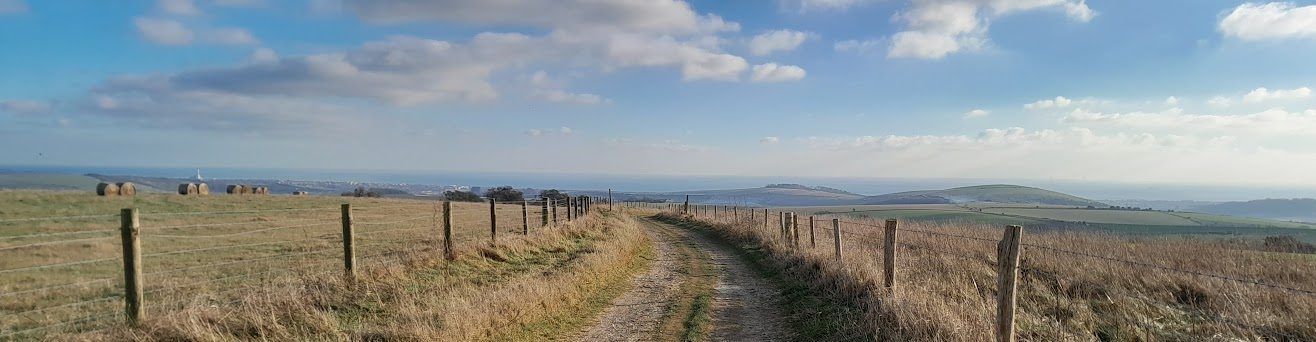
Sometimes, I wish that the world was different. There are some things which, if we could, we would change. There’s a sense in which we are saying to God, couldn’t we just do this better? Have you ever imagined what the world would be like if you had created it?

Psalm 19 speaks about the fact that the Spirit of the Creator is evident in His creation.

‘The heavens declare the glory of God; the skies proclaim the work of His hands.’ (Psalm 19:1)

One result of my reflection was this short poem, written in 2012. 

If I were the creator god
How different things would be!

The hills, the sea, the open sky
The things which creep and swim and fly
The who, the what, the where, the why
The gardens, flowers shrubs and trees
And every thing your eye perceives

The things we sense or feel or see
Would echo not of Him, but me.

If I were the creator god
How different things would be!